

English
Our 5-stage English learning journey provides opportunities for pupils to understand and access the writing process as well as giving them regular opportunities to see high-quality models. As the DfE Writing Framework published earlier this year identifies, 'Sequenced teaching gives pupils the best chance of mastering the written language, and of understanding the writing process and models to support their writing. Such teaching gives them a framework as they learn to express their own narratives and arguments.'
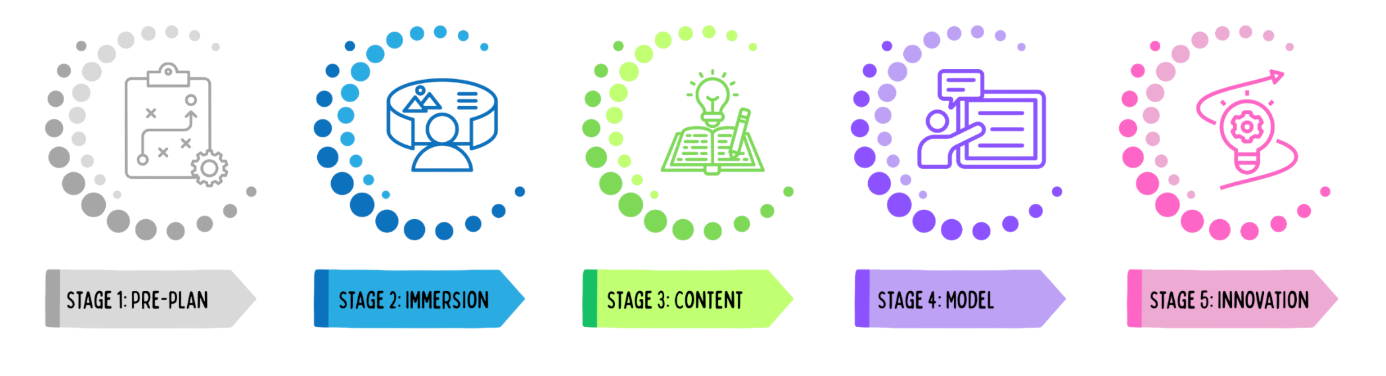
Stage 1: Pre-Plan
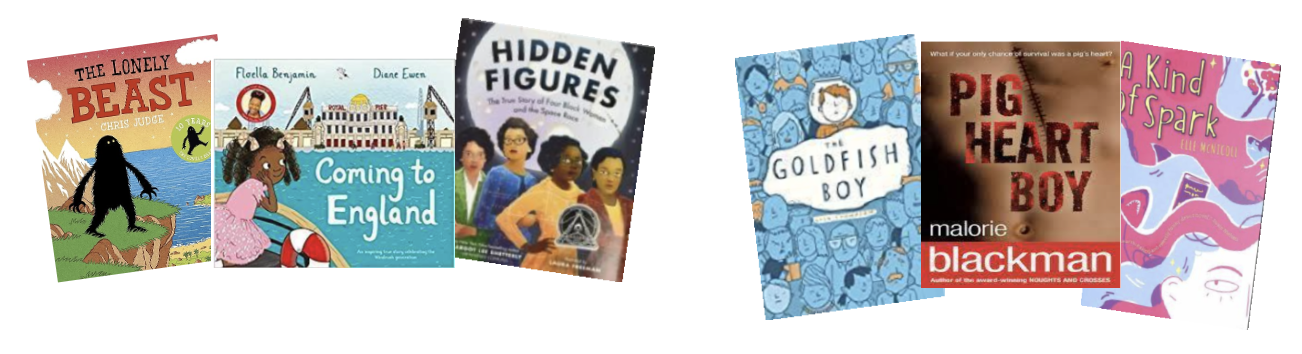
This initial stage is all about meticulous teacher preparation. Before a single lesson is taught, our teachers delve deep into the core text. These high-quality texts have been carefully chosen to develop the children’s understanding of our global curriculum themes (eg; Social Justice and Equity; Identity and Diversity; Sustainable Development; Peace and Conflict; Human Rights; and Power and Governance) and serve as the foundation for a series of lessons in a learning journey. Teachers then identify and familiarise themselves with supplementary texts, and thoroughly understand the genre, features, and purpose of the writing outcome. Crucially, they craft a high-quality model text (to be used later in Stage 4) and pinpoint specific knowledge, Key Performance Indicators (KPIs) relevant to that year group, outcome and class, and gaps in the pupils’ knowledge to cover as part of Stage 3. This backward planning ensures every step of the learning journey is purposeful and leads directly to the desired outcome.
Stage 2: Immersion
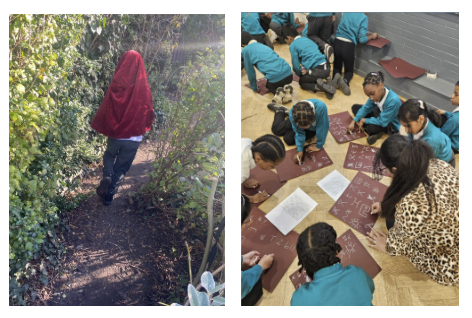
The purpose of immersion is to help our children develop a thorough understanding of the text type they will be writing and the theme being covered. We kick off with an exciting 'hook' lesson – an energetic introduction designed to grab attention and ignite curiosity. Children are then often introduced to the model text, exploring its features and language, laying a strong foundation for their own writing.
Stage 3: Teaching the Skills and Knowledge Content
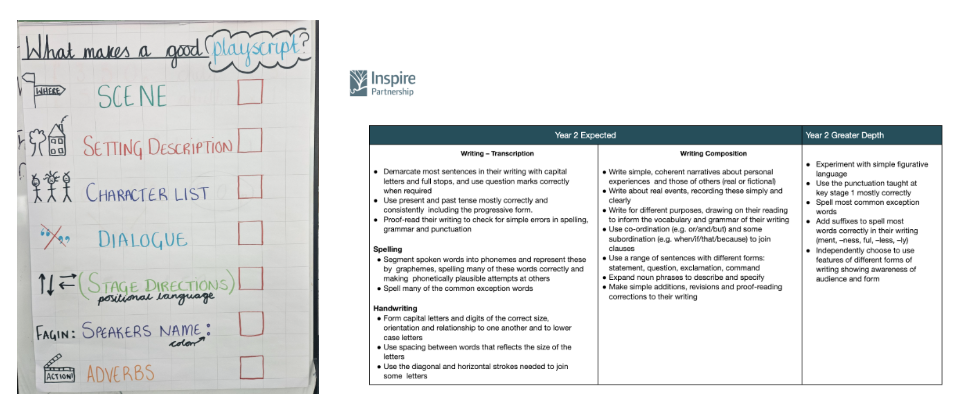
This stage is where the explicit teaching happens. It consists of a series of focused lessons that equip children with the essential skills and knowledge they'll need for their writing. We meticulously cover identified KPIs and address any specific gaps, ensuring all content is taught, where possible, within the context of the final outcome and theme. This makes learning relevant and memorable. This stage gives children the opportunity to develop competency over time by building up the relevant and necessary skills. We recognise that ‘one of the greatest influences on motivation is a pupil’s self-belief; the most powerful driver of self-confidence is successful performance’ (The Writing Framework, DfE, July 2025). By building these skills over time, we enable pupils to produce writing they can feel proud of.
Stage 4: Modelled Content
In this stage, the teacher expertly models and scaffolds the planned outcome. We use a 'chunked' version of our pre-planned model text, allowing children to see each skill and piece of knowledge taught in Stage 3 demonstrated in context. Crucially, after each small chunk, children are given immediate opportunities to apply what they've learned themselves, building confidence and understanding step-by-step, sentence by sentence. This is why ‘sentence-level teaching focusing on building understanding of how to construct sentences should be an important component of any writing curriculum. It is the engine that propels pupils from writing the way they speak to using the structures of written language’ (The Writing Framework, DfE, July 2025) . By the end of this stage, every child has produced their own version of the modelled text.
Stage 5: Innovation
Children are empowered to innovate and adapt the model text to create their own unique versions. For younger or less confident writers, staying close to the structure and vocabulary of the model text provides a secure scaffold, building confidence and understanding. This approach aligns with the DfE Writing Framework, which notes that ‘Research indicates that young people can enjoy writing and be more motivated to write when they can make choices about it... Even when composing a single sentence, pupils can choose which words to use to communicate their ideas... and more’. Children write their innovated text chunk by chunk, receiving daily feedback from the teacher on their next steps. This continuous feedback loop enables immediate editing and refinement, fostering a powerful sense of ownership and craftsmanship in their writing.